.webp)
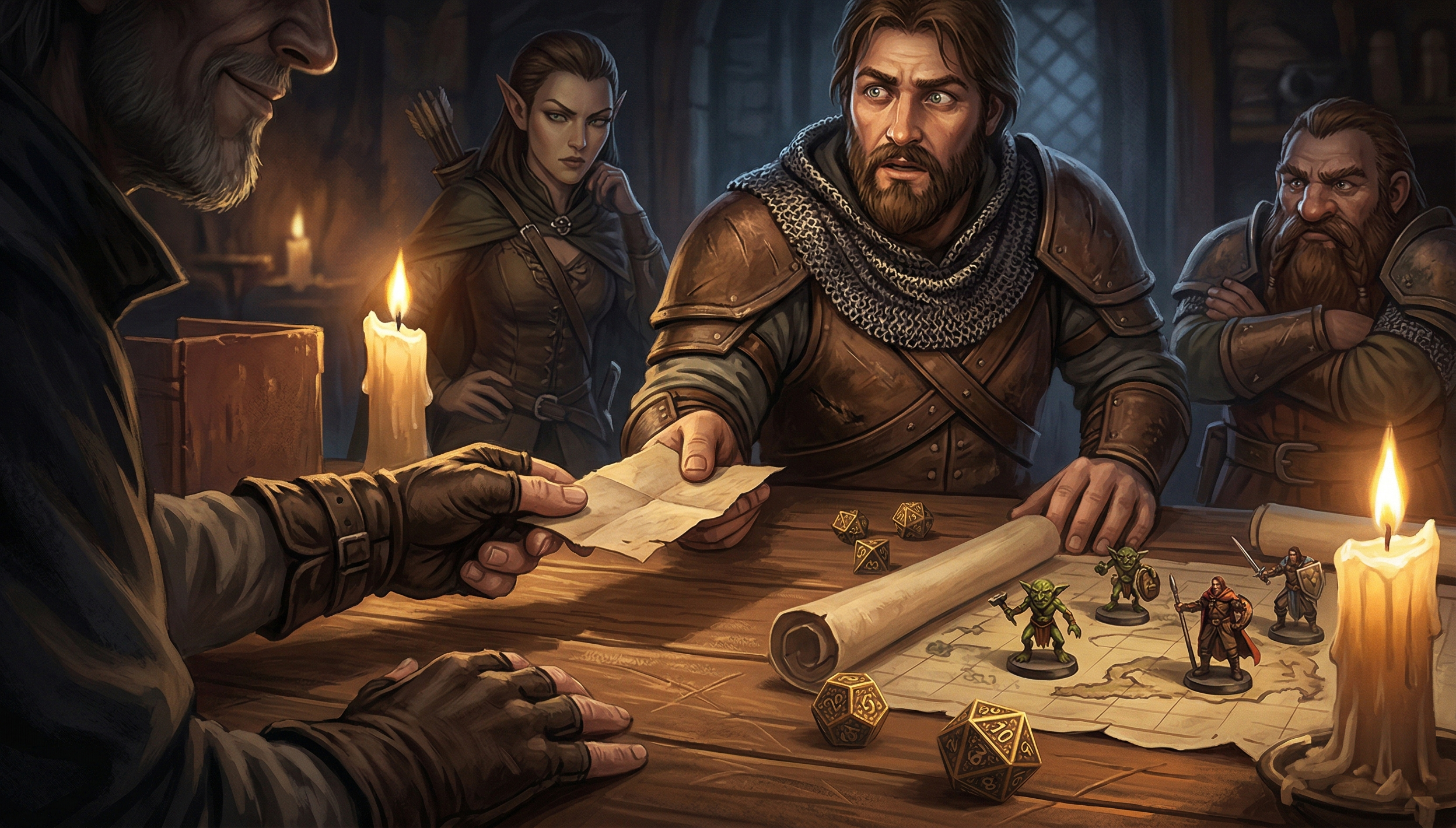
One of my favorite tactical maneuvers as a Game Master requires zero dice, zero rulebooks, and a single scrap of paper. It is the simple, physical act of folding up a note, sliding it across the table to one specific player, and offering a grim nod.
Most of the time, the note is completely blank.
When the player opens it, reads nothing, and gives me a confused look, I hold their gaze and say, "Don't tell anyone what's on it." Instantly, the temperature in the room changes.
Why pull a stunt like this? Because a memorable tabletop campaign requires more than just combat math, it requires emotional stakes. I pass notes to deliberately stoke paranoia among the group.
If you are running a scenario steeped in shifting allegiances, shadowy plot intrigue, or a shape-shifting doppelgänger hiding within the ranks, a secret message is a weapon. It isolates the recipient and immediately makes the rest of the table suspicious. It mirrors the crushing, claustrophobic dread of a film like John Carpenter's The Thing, where nobody knows who to trust, and the guy sitting next to you might be the enemy.
Here is the hard truth of running a game: As the GM, you are not just a neutral referee. You are a director.
Your players, though they drive the action forward, are ultimately your audience. When they sit down at your table, they bring their own genuine fears, anxieties, and protective instincts regarding their characters. A great director doesn't let those emotions sit idle. You have to actively manipulate the tension, taking the notes from the director's chair and applying them directly to the player's psyche.
Just like a master of a psychological thriller, your job is to build suspense by controlling what the audience knows, and more importantly, what they think they know. You have to stoke the fires of their anxiety to make the eventual climax hit with maximum impact.
This brand of audience manipulation is particularly lethal when you sit down with a brand new group.
When players haven't shared a trench before, they don't know each other’s tells, and they have absolutely no idea how far you are willing to push them. Sowing seeds of paranoia early on establishes that your world is dangerous, unpredictable, and requires them to stay on their toes.
This isn't about being adversarial; it is about crafting a deeply memorable, high-stakes experience. The next time the party sets up camp or enters a crowded tavern, fold up a blank piece of paper and slide it across the table. Watch what happens.
Are you ready to direct a campaign where the psychological stakes are as deadly as the physical ones? If you want to run games built on gritty realism, deep historical immersion, and tactical tension, you need PsychScape Historical.
Secure the core rules directly from the Man of Ages website, or get your physical copy shipped to your door by searching PsychScape on Amazon.
Take the director's chair. Command the table.