.webp)
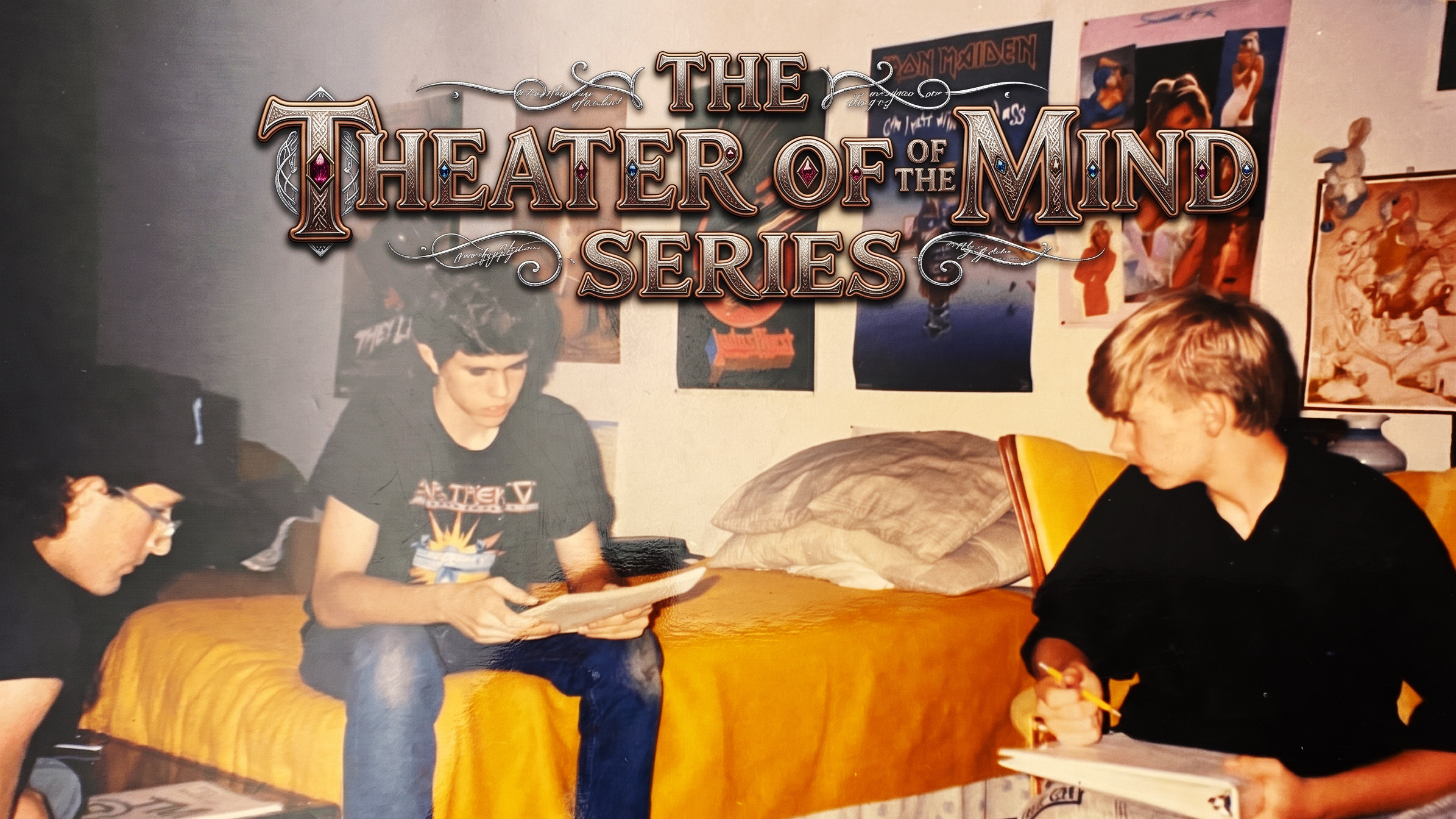
Welcome to Part 3 of The Theater of the Mind Series, an ongoing collection where I break down exactly how I run my campaigns. We are stripping away the bloated rulebooks, abandoning the grid, and stepping directly into my preferred arena. Today, we are exploring the raw psychological impact of collaborative immersion.
Jordan loaded his over and under 12 gauge shotgun, saving the final round to load into the single barrel hidden in the palm of his cybernetic arm. He turned the corner, looked toward the mile high skyline of Durane City, and waited for the door of the street level dive joint to slide open. Out stepped Bud Skuzz, and today he was going to die.
Jordan did not hesitate. He opened fire immediately, with absolutely no regard for the civilian crowds on the street or the hover cars coming in for a landing. Bud was no slouch. He was wearing the latest in ballistic armor and obliged Jordan by returning heavy fire from his XL-75 Plaz-Light rifle. Jordan advanced through the crossfire and landed a knockdown shot. Before he could close the distance, Bud was up and running for his life, his rifle blown to pieces on the concrete.
Leaping atop a landing hover car, Jordan claimed the high ground and fired twice. Bud went down hard, blood splattering the street. Jordan walked up slowly, leveled the 12 gauge, smirked, and fired the final shot point blank into his face.
Out of game, I was elated. I had been hunting Bud in this campaign for months and finally secured my revenge. My Game Master, Pat, and I were sitting on top of a large workbench in our seventh hour Art class. I was so amped up that I was making a lot of noise, and suddenly I remembered I was sitting in a high school classroom.
When I looked over to gauge the reaction of the room, I saw something I will never forget. Every single one of the twenty students, along with our teacher Mr. Myers, had stopped working. The room was completely silent. They were just sitting there, listening to our sci-fi campaign unfold exactly like a high stakes audiobook.
The sheer psychological power of the theater of the mind is drastically underrated today. Modern tabletop culture is obsessed with plastic miniatures, foam terrain, LED television tables with animated lava, and dropping five hundred dollars on a plastic wizard tower.
The theater of the mind requires absolutely none of that. It has no physical limitations. Its only requirement is clear, authentic communication between the players and the Game Master.
The moments I remember most vividly about gaming are the moments I was fully immersed in the simulation. I saw the battlefield playing out right in front of me. I could smell the ozone, taste the blood, and feel every brutal hit my character took. It was just as real as real life, and in some cases, it was more intense.
Focusing exclusively on that tier of immersive play was just how we operated. Our tabletop mentor was a veteran named Bob. He was older than our group, had attended the very first Gen Con conventions, and won awards for his Dungeon Mastering back in the golden era. Bob taught his brother Pat, and eventually me, how to run a proper game. It was always theater of the mind. Occasionally we would draw a rough map or pull out a few dice to orient everyone's spatial awareness so we could escape a deadly choke point, but the rest of the action was rendered entirely in our heads.
We enforced strict discipline at the table. Everyone was required to speak completely in character. You had to use the actual names of the other characters, and you had to describe your specific tactical actions with cinematic flair.
In the final session of our Galactic Battles campaign, a gritty tabletop game we built from scratch in high school, we wrapped up a grueling five year story arc. My character and his partner finally took their revenge on another player character for a bitter betrayal that happened years prior.
In the game, our target Platinum was dead. Jordan and Claptus watched silently as Bill took a quick shuttle over to Platinum's ship to loot the remains. Bill boarded the vessel and started tearing through the cargo. Claptus looked over at Jordan. Jordan walked calmly over to the heavy ship cannons, locked onto the target, and opened fire, instantly vaporizing the ship and Bill along with it.
Out of game, Seth, the player running Bill, asked us to pause for a second. He took the floor, beautifully described his character's final reaction, and offered the ultimate honor of acknowledging that he had been completely outplayed and deserved his brutal fate.
That specific moment, and hundreds of others just like it, live in my memory as vividly as the birth of my own children.
Only the theater of the mind can achieve that level of impact. Only that kind of collaborative immersion, embraced by the entire table, can forge a world that you remember, see, and feel for the rest of your life.
If you are ready to strip away the plastic toys and run a campaign fueled by adrenaline and tactical immersion, you need a system built for the job. Step into the brutal, historically grounded world of PsychScape Historical.
You can secure the core rules directly on the Man of Ages website, or pick up your physical copy by searching PsychScape on Amazon.
Equip yourself, and happy gaming.