The Marvel-fication of the Dungeon: Why Your 5E Characters are Secretly Avengers
February 7, 2026
No items found.
Listen, I’ve been in the trenches of TTRPGs since the days of THAC0 and counting every single copper piece. I’m a 2E soul living in a 5E world. Recently, I jumped into the DM seat for a guest spot in a Planescape campaign—running a Wizard of Oz inspired jaunt called The Emerald Vector. I thought I was prepared. I sent twelve Sensate Demons (roughly 75 HP each) to kidnap a party of six Level 4 characters.
In the old days, that’s a TPK or a very desperate retreat. In 2024? It was a Saturday morning cartoon.
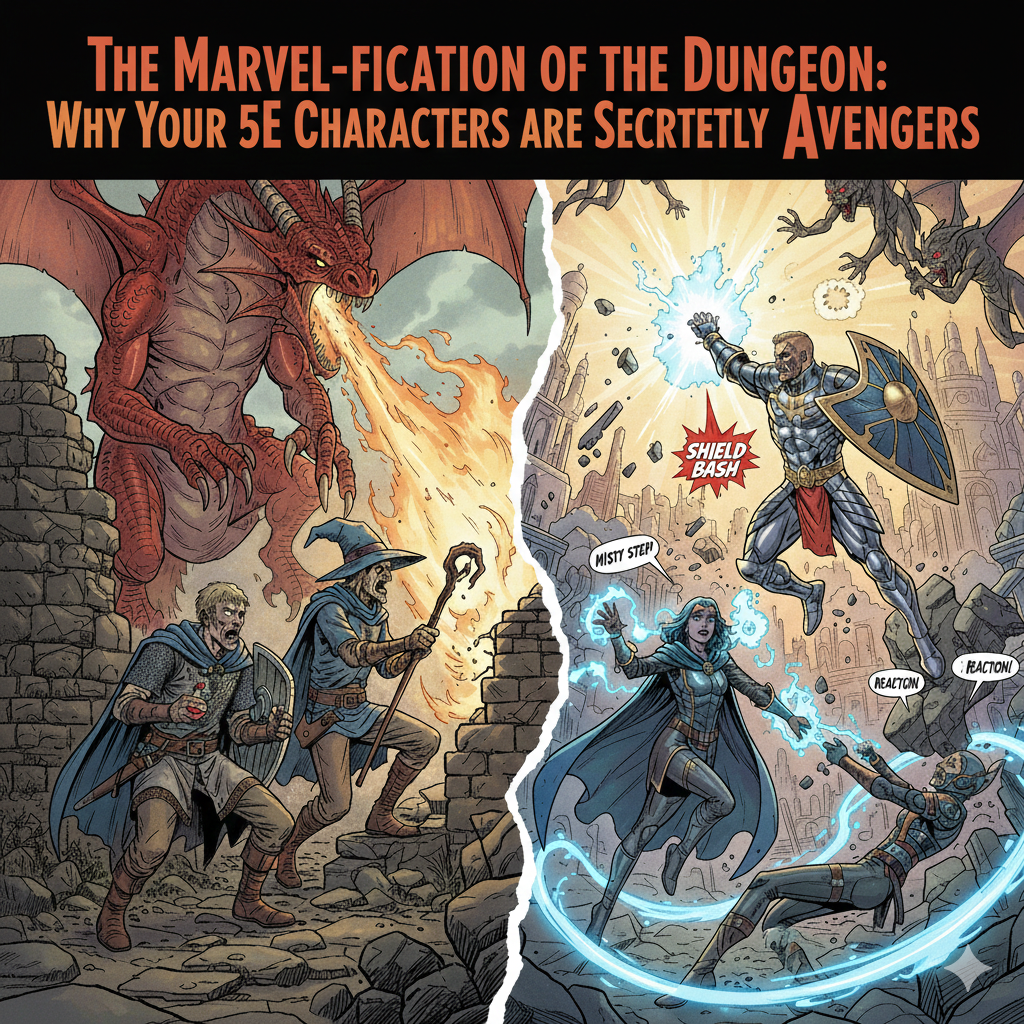
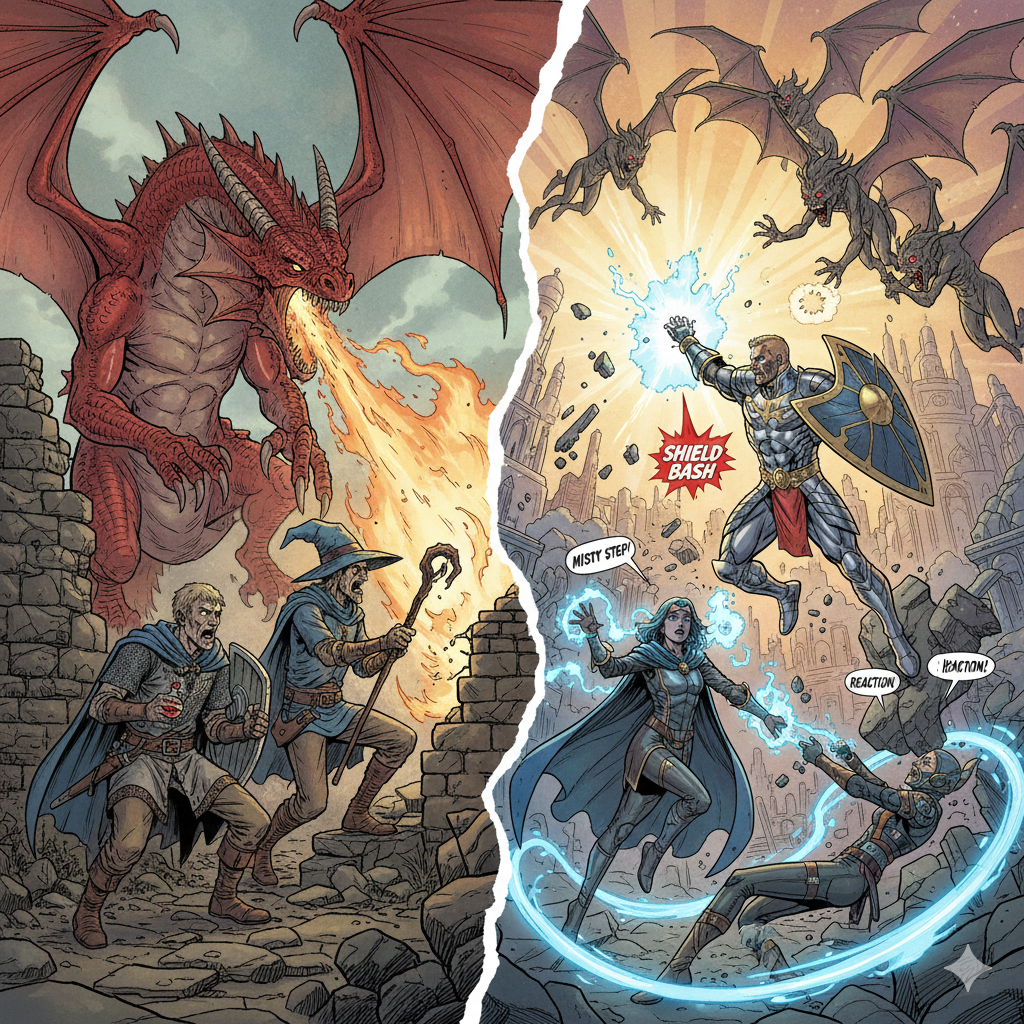
I’ve realized something: D&D 5E isn't a high-fantasy survival game anymore. It’s a superhero simulator wrapped in a Renaissance Fair skin. ---
The "Power" Creep is Real
In earlier editions, you were a guy with a sword or a wizard who might die if a housecat sneezed on you. In the 2024 Player’s Handbook, every class is front-loaded with "Class Features" that feel less like skills and more like Mutant Powers.
The "Get Out of Jail Free" Cards: I watched my demons grab players, only to have them Misty Step away as a Bonus Action. In the 2024 rules, Fey Step (for Eladrin) or the revamped Magic Action economy makes pinned-down positions almost impossible to maintain.
The Action Economy Bloat: Between Cunning Strikes for Rogues or the new Weapon Properties (like Push or Topple), the players aren't just attacking; they are controlling the battlefield passively.
Automatic Retaliation: You mentioned a "shield push." In the new rules, a Fighter with the Shield Master feat or the Interception Fighting Style can mitigate damage or shove an enemy 10 feet back just for trying to hit them.
It’s a Game of "Buttons," Not "Brave Feats"
When I ran The Emerald Vector, I expected a scrap. What I got was a tactical display of cooldowns.
Telekinetic Saves: The Telekinetic feat (or subclass abilities like the Psi Warrior) allows players to shove allies out of a demon's reach using a Bonus Action. It’s essentially a tractor beam.
The Summoning Swarm: You mentioned conjuring Sea Hags and familiars. The 2024 rules have streamlined summoning (see Summon Beast or Summon Aberration), but they still clog the initiative. Every "pet" is another hit point sponge and another attack the DM has to account for.
Reaction Overload: Between Shield, Absorb Elements, and Opportunity Attacks, the players have a "Reaction" for every move the DM makes. It’s like playing chess against someone who can move their pieces during your turn.
The 2024 D&D rules shift the game toward a "superhero" feel by front-loading characters with potent abilities and streamlining combat actions to favor player agency. Below are the specific rules and mechanics, cited from the 2024 Core Rules and community analysis, that illustrate this evolution.
1. Front-Loaded Power: Species and Backgrounds
Characters now start the game with significantly more utility than in the 2014 edition.
Origin Feats: Every character now receives a feat at Level 1 based on their Background. For example, the Magic Initiate feat is a common origin that grants two cantrips and a Level 1 spell to any class at no cost.
Species Traits as "Mutant Powers": Traits like the Elf's Fey Step are now core species features. Aasimars can use their Celestial Revelation (flight or extra damage) as a Bonus Action rather than a full action.
Heroic Inspiration: This mechanic has been revamped to allow a player to reroll any die, not just a d20. Humans gain this automatically after every Short Rest.
2. Tactical "Buttons": Weapon Mastery and Cunning Strikes
Martial classes now have "always-on" tactical abilities that function like specialized combat maneuvers.
Weapon Mastery: This system grants weapons unique properties that trigger on every hit without consuming resources.+1
Push: Shoves an opponent 10 feet back with no saving throw on a successful hit.
Topple: Forces a Constitution saving throw (DC 8 + Ability Mod + Proficiency) or the target falls Prone.
Nick: Allows a second light-weapon attack without consuming a Bonus Action, freeing that action for other powers.
Cunning Strikes (Rogue): Starting at Level 5, Rogues can trade 1d6 of Sneak Attack damage for "control" effects, such as Poisoning a target or Withdrawing without provoking opportunity attacks.
3. The Action Economy: Bonus Actions and Reactions
The 2024 update increases the number of things players can do outside of their main action.
Standardized Ritual Casting: More classes now have access to ritual casting. Anyone can ritual cast a spell they have prepared, adding massive utility without expending spell slots.
Telekinetic Shove: The Telekinetic feat allows a player to use a Bonus Action to shove a creature 5 feet away. This is frequently used as a "tractor beam" to pull allies out of danger without them needing to Disengage.
Reaction Overload:
Shield Master: Now allows a player to use a Reaction to take zero damage on a successful Dexterity save.
Interception Fighting Style: Allows a player to use a Reaction to reduce damage to an ally within 5 feet by 1d10 + Proficiency Bonus.
War Caster: A player can cast a spell as an Opportunity Attack, provided it only targets that one creature.
4. High-Value "Super" Spells
Several spells have been buffed or reworked to ensure they are more reliable.
Cure Wounds: Now heals 2d8 per spell level (double the 2014 amount), making mid-combat healing much more effective.
Counterspell: Now requires the target to make a Constitution Saving Throw. Notably, monsters do not have "spell slots" in the 2024 design, putting them at a mechanical disadvantage against player counter-magic.
Summoning Spells: Spells like Summon Beast or Summon Aberration now use standardized stat blocks with multi-attacks that scale with the spell level, essentially adding extra "party members" to the initiative count.
5. Attrition and Recovery
The "survival" aspect of the game has been lowered in favor of faster recovery.
Long Rest Buff: Players now regain all expended Hit Dice at the end of a Long Rest, rather than just half.
Exhaustion: The system has been simplified to a flat -1 penalty to d20 tests and -5 feet of speed per level, making it less punishing at early stages than the 2014 version.
The 2024 D&D rules shift the game toward a "superhero" feel by front-loading characters with potent abilities and streamlining combat actions to favor player agency. Below are the specific rules and mechanics, cited from the 2024 Core Rules and community analysis, that illustrate this evolution.
The Shift from Resource Management to Power Fantasy
In 2E, the horror was in the attrition. Do we have enough torches? Can the Cleric heal one more time? In 5E, especially with the 2024 updates, the game is designed to make the players feel legendary by Level 3.
By Level 4, these "heroes" have enough HP and specialized Feats (which they now get automatically at certain levels) to treat a demonic ambush like a minor inconvenience. They aren't adventurers; they're the Fantastic Four in chainmail.
Is it Bad? Or Just Different?
As a guy who loves the grit of PsychScape, this "Super-Heroic" shift is jarring. The "bounded accuracy" of 5E means the players hit more often, stay up longer, and have a utility belt of powers that would make Batman jealous.
If you want a game where the players are vulnerable, 5E 2024 isn't it. But if you want to watch a group of mortals dunk on twelve demons while eating popcorn? Well, Marvel has arrived at the table.
What about you? Have you noticed your players becoming untouchable gods by Level 5, or am I just an old-school DM yelling at a very shiny, very powerful cloud?
.webp)