.webp)
Welcome to Part 1 of The Theater of the Mind Series, an ongoing collection where I break down exactly how I run my campaigns. We are stripping away the bloated rulebooks, abandoning the grid, and stepping directly into my preferred arena. First up on the chopping block is combat pacing and the economy of the dice.
When exactly should a Game Master call for an ability check in a tabletop role-playing game?
If you are running a strictly rigid, turn-by-turn grid simulation, the rulebook will dictate every single movement. But I run a highly dynamic theater of the mind play style. In my campaigns, turns are rarely linear. They are executed in order of raw urgency.
Players are frequently declaring their actions simultaneously. I listen carefully, catching the intent in the crossfire, and drop strategic questions just to watch them sweat.
"Are you doing that with or without the rope?" I ask, offering a sly grin.
Sometimes I outright reject actions that fall wildly outside the scope of the current tactical timeframe. In these scenarios, half the party might be fighting for their lives to hold off a frontal assault, while the other half is frantically troubleshooting a lethal trap blocking their escape. I run both of these crises simultaneously. It is chaotic, exactly like a real firefight. Dice are rolling constantly. I am rolling counter-attacks and environmental checks, only pausing the carnage when a critical hit lands so everyone at the table can witness the massive fate awaiting their friend or their enemy.
To run a session with this level of velocity, you must be absolutely fluent in the core fundamentals of your system, and completely willing to eschew the bloated, nuanced rules that bog down the pacing.
For instance, if I know an enemy's damage output perfectly, I will often scale the damage based entirely on the margin of the attack roll. If a goblin needs a 12 to hit a player's Armor Class, and rolls exactly a 12 with a 1d6 weapon, I will instantly declare they take 1 or 2 points of damage. If that goblin rolls a 19, they take the maximum of 6. I reserve damage rolls strictly for special weapons, massive spells, or critical strikes.
I will even skip a healing roll and grant a character maximum health if I see the player is completely invested in resolving a desperate situation. You know the exact moment I am talking about. The player is sweating profusely, terrified their character is about to die, and they just formulated a completely insane, last-ditch survival plan. It will probably fail, but if they pull it off through sheer grit and the Rule of Cool, they earn that maximum heal. It speeds up the session and directly promotes better role-playing.
As a rule, I always roll to hit. It is fair, and the physical threat of the dice cannot be skipped.
Unless a player does something supremely stupid.
When this happens, you will know it immediately. They will look at you with pleading eyes, silently begging you not to punish them too harshly. But you are the Director, and you are going to drop the hammer anyway.
When a character practically volunteers for their own execution, the hit is automatic. All gameplay grinds to a halt. The entire scene shifts into slow-motion as the rest of the party watches the glorious, agonizing doom of their comrade dropping to zero hit points. I spare absolutely no descriptive details. I still roll the damage just to hear the plastic hit the table, but they do not get a chance to dodge. You gave them plenty of rope during the session, and they hung themselves with it.
So, when do the actual ability checks happen?
Any type of Death Save is obvious. But standard Dexterity or Strength checks must be reserved exclusively for critical, game-changing moments when the balance of the encounter is about to violently shift.
We have to assume the characters your players are running are seasoned, capable adventurers. Unless they are suffering from a specific condition, curse, or severe injury, routine combat maneuvers do not require a roll. The emphasis must remain on the speed and brutality of the combat.
You only demand the dice when the stakes are absolute. If your thief wants to swing across a burning tavern, execute a blind backflip onto the shoulders of the enemy boss, and drive a dagger into their spine? In my estimation, that is three consecutive Dexterity checks and a final, heavily modified attack roll.
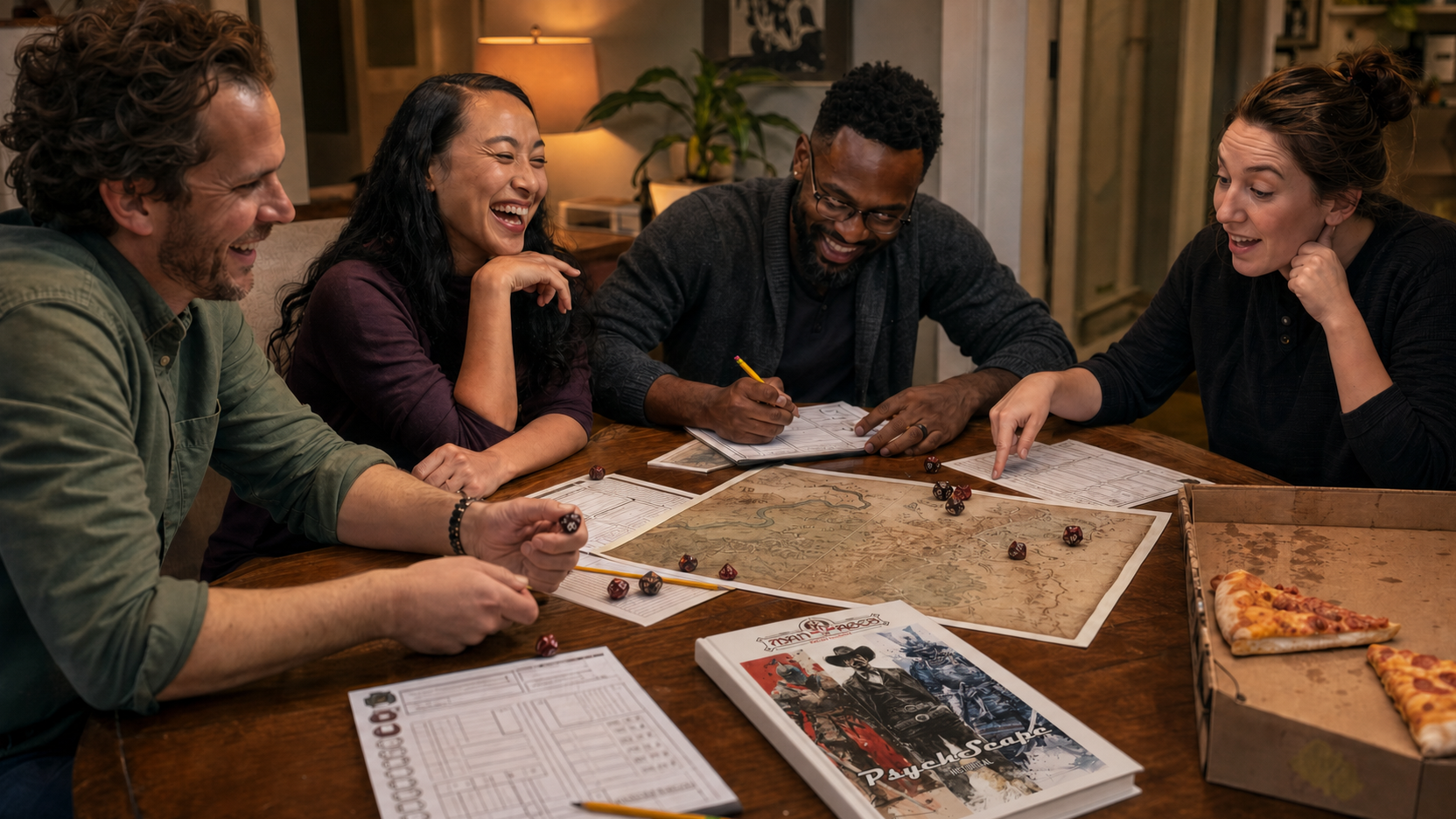
This aggressive style of combat management works best in the theater of the mind. It demands that players stop looking at their phones and listen intently to the tactical reality of the room. Sometimes, I will pull out a handful of dice and physically arrange them on the table just to orient everyone's spatial awareness. As soon as the layout is clear, I sweep the dice away.
Keep their eyes up. Keep the pressure on.
If you are ready to strip away the bloated rulesets and run a campaign fueled by adrenaline and tactical chaos, you need a system built for the job. Step into the brutal, historically grounded world of PsychScape Historical.
You can secure the core rules directly on the Man of Ages website, or pick up your physical copy by searching PsychScape on Amazon.
Equip yourself, and happy gaming.