.webp)
Welcome to Part 2 of The Theater of the Mind Series, an ongoing collection where I break down exactly how I run my campaigns. We are stripping away the bloated rulebooks, abandoning the grid, and stepping directly into my preferred arena. Today, we are taking aim at the biggest distraction on the table.
I have played tabletop wargames for nearly 30 years. De Bellis Antiquitatis (DBA) is my main jam, but I have spent my fair share of time standing over a Warhammer 40K table. A little tactical game in the 90s called Fire Fight was my first jump into gaming with miniatures, and I cut my teeth on classic BattleTech.
I love miniatures. Unless we are playing a tabletop role-playing game.
When it comes to RPGs, I hate them. I hate them because they are a massive distraction from the narrative. But I hate them most of all because they take a game of limitless possibilities and reduce it to a rigid board game. The imagination of the players and the Game Master alike is instantly dulled, and the physical limitations of the board shut down any truly creative problem-solving.
When you use a physical board, the encounter is definitively set. It becomes a video game.
Now, this is not entirely without merit. Early D&D modules had brilliant, intricate maps. The original Ravenloft adventure remains one of my absolute favorites. I vividly remember using that map to my tactical advantage as I chased a Paladin through Count Strahd's castle while being actively hunted by two massive golems. A good map is a wonderful tool.
But the human mind imposes limitations based on what it physically sees. What is behind the door at the absolute edge of the map? Nothing. The player can literally see there is nothing printed there, and thus they assign no tactical importance to it.
With those physical boundaries, we limit how the campaign is experienced. I have played with some of the most beautifully painted, expensive models in the world. Yet, my memories of those specific sessions are mostly interpersonal, because the epic, climactic moment of the narrative was reduced to simply knocking over a two-inch piece of plastic gently, so as not to chip the paint.
The theater of the mind restricts absolutely nothing. Even the confines of a printed adventure module cannot contain a party armed with healthy, experienced imaginations.
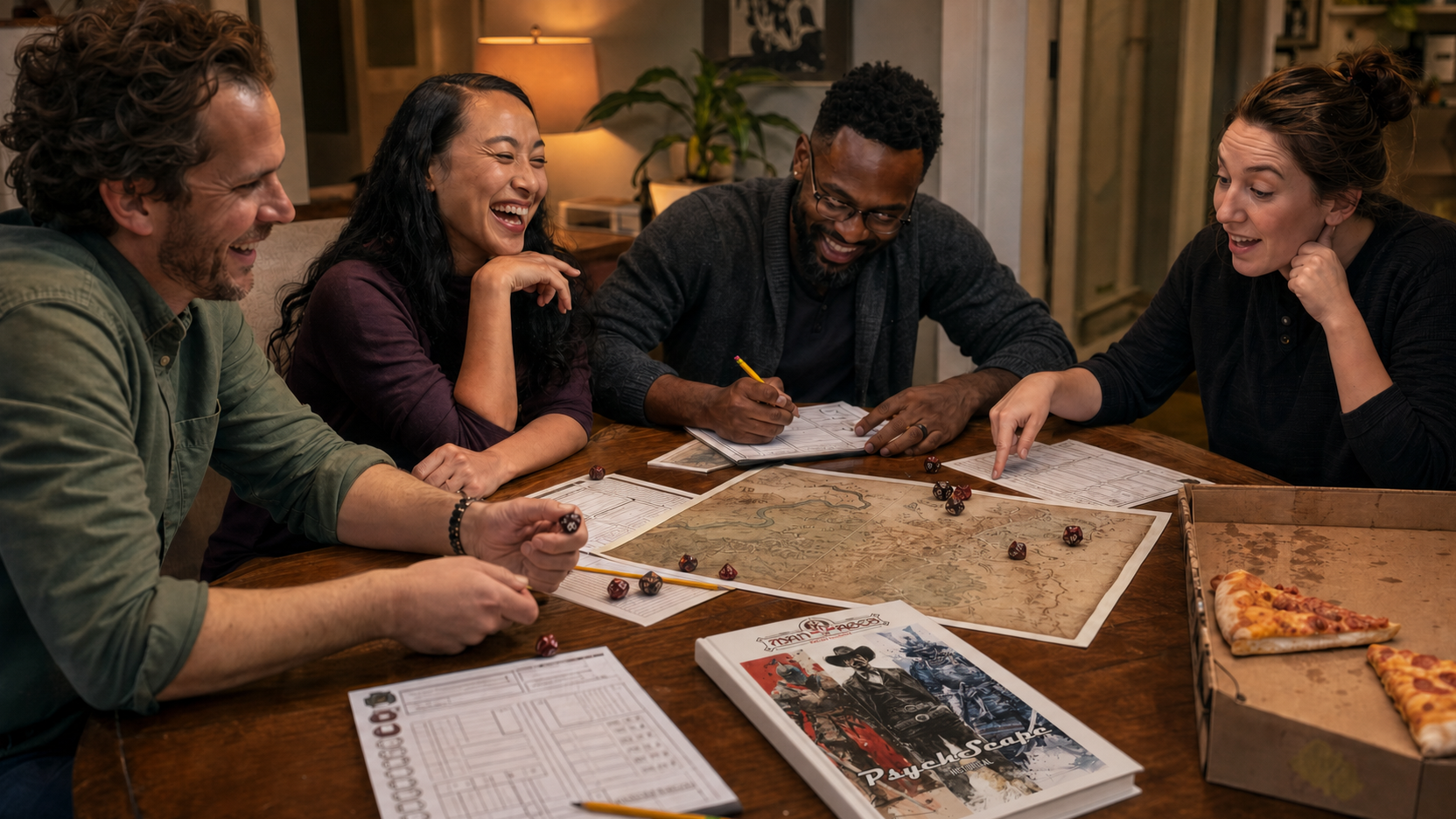
Without plastic avatars, the players actually become their characters. You are no longer talking to your buddies James or Pat across a folding table. You are talking directly to Bud Skuzz and Calaptus Orbis. You can feel the physical weight of the conversation unfolding. The adrenaline kicks in. At any moment, either one of you could pop off, and then the whole room goes up in flames.
You twitch. Bud sees it. He isn't stupid, so he pulls his iron and falls back, dropping the guy next to you. His guts spill onto the street. You start shooting back blind, the thick smoke from his modified .45 pistol clouding the entire alleyway. A round flies past your nose. You smell death.
Roll for initiative.
This phenomenon is real, and it works with nearly any size group. Have you ever watched a live-action Vampire: The Masquerade game? I watched them play for an hour in a convention center at Gen Con in 1997. (I actually talked to Gary Gygax in a back hallway there for about 20 minutes that same weekend). Those live-action players get completely lost in the simulation. They are fiercely in character. You can see genuine fear and hate in their eyes.
When the miniatures are removed from the table, the players are forced to listen.
Your every word matters as you move from player to player in the initiative order. They need to know what is happening to all of them, and there is no visual crutch to rely on. Listening, and talking in character, is the only way to survive. Every single word someone says can lead to immediate success or catastrophic failure.
"I cast Fireball!"
Those are the most terrifying words in the game.
"Wait, my character is right behind the wizard!" the party's rogue cries out in a panic.
"Then how were you actively picking the lock on the door he is firing at just last round?" the GM rebuts.
The player's face goes completely pale.
"Roll for damage."
Miniatures make combat too safe. They allow players to mentally check out. A player can coast to their next turn, assured that as long as the plastic figures are clustered on the other side of the grid, they are perfectly fine. The radius of a spell can be precisely measured, and their miniature is miraculously just outside the line of sight. Better check with a ruler to be sure.
It muddies the game. It turns a living narrative into an exercise in geometry. It becomes role-playing right up until the combat starts, and then it is just calculating Eldritch Blasts, rolling main-hand attacks, and drinking a potion every other turn.
Stop playing a board game. Ditch the grid, and start cultivating an epicly shared hallucination that your players will remember for the rest of their lives.
If you are ready to strip away the bloated rulesets and run a campaign fueled by adrenaline and tactical chaos, you need a system built for the job. Step into the brutal, historically grounded world of PsychScape Historical.
You can secure the core rules directly on the Man of Ages website, or pick up your physical copy by searching PsychScape on Amazon.
Equip yourself, and happy gaming.